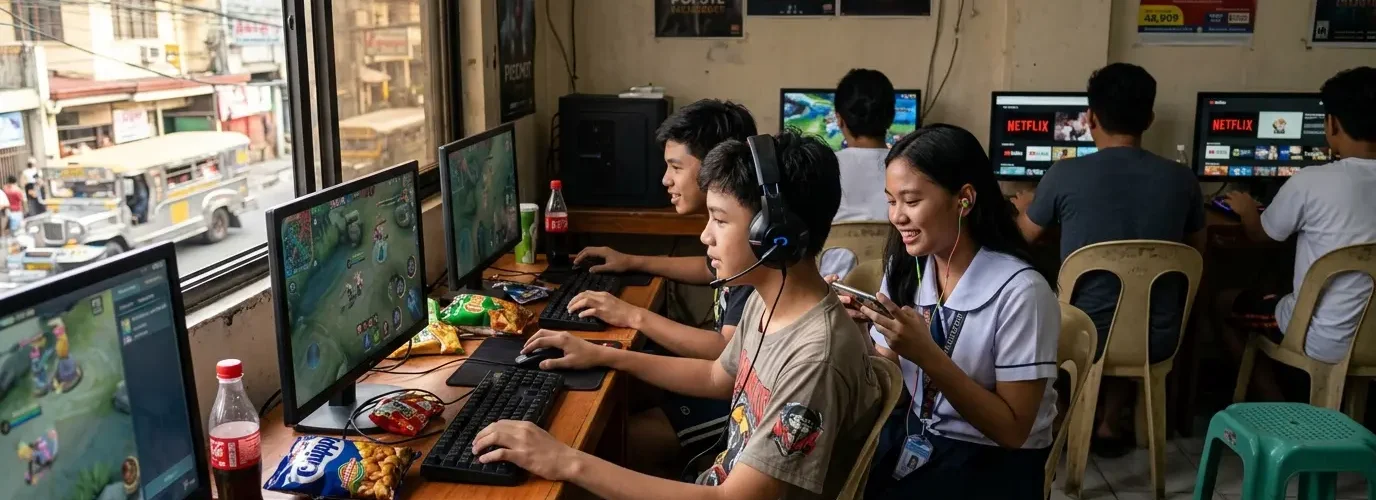
The Philippine entertainment landscape has undergone a quiet but remarkable transformation over the past decade. What was once dominated by neighborhood arcades, mahjong parlors, and local cockfighting arenas has steadily evolved into a sophisticated digital ecosystem — one that attracts millions of players daily, generates billions of pesos in revenue, and sits at the crossroads of technology, regulation, and cultural identity. Today, online gaming and digital entertainment are no longer fringe activities in the country. They are mainstream.
An Industry Finding Its Footing
The Numbers Behind the Growth
The Philippines has positioned itself as one of Southeast Asia’s most active online gaming markets. Several factors explain this momentum:
- Demographics: With a median age of around 25 years and over 85 million internet users, the country has an enormous pool of digitally native players who are comfortable spending leisure time online.
- Mobile penetration: Smartphones have become the primary gateway to the internet for most Filipinos, and gaming platforms have adapted accordingly — offering lightweight apps and browser-based experiences that work even on modest hardware connections.
- Disposable income trends: As the Philippine middle class grows, more households allocate a slice of their budget to digital entertainment, including gaming subscriptions and in-app purchases.
- Post-pandemic shift: The years following the COVID-19 lockdowns accelerated the move to digital leisure, with many Filipinos discovering online gaming as a substitute for traditional social gatherings — and sticking with it long after restrictions lifted.
By 2025, the Philippine online gaming sector — spanning casual games, e-sports, iGaming, and social entertainment platforms — was estimated to be worth tens of billions of pesos, with consistent year-on-year growth projected well into the next decade.
What Filipino Players Are Looking For
Familiar Games in New Formats
One of the more interesting aspects of the Philippine gaming market is how players gravitate toward digital adaptations of games they already know and love. Bingo, for example, is deeply embedded in Filipino social culture. It has been played at school fairs, barangay events, and community gatherings for generations. The transition of this format to digital platforms felt natural rather than forced — and the uptake was swift.
Platforms that understood this cultural familiarity early on gained a significant edge. Rather than introducing unfamiliar game mechanics, they gave players the comfort of something recognizable, wrapped in a smoother, more accessible digital experience. This approach — meeting players where they are — has been central to the success of local and regionally focused platforms.
Among the names that have become familiar in this space, BingoPlus has emerged as a notable player, offering a digitized bingo experience tailored for the Filipino market. Its ability to translate a beloved community game into a scalable digital product reflects a broader industry trend: localization over globalization.
Key Expectations Among Filipino Gamers
When surveyed about what matters most in their gaming experience, Filipino players consistently highlight:
- Ease of use: Clean interfaces, intuitive navigation, and fast loading times are non-negotiable.
- Trust and security: Players want to know that their personal information and financial transactions are protected.
- Local payment options: Support for GCash, Maya, and other local payment methods significantly boosts platform adoption.
- Community features: Chat functions, leaderboards, and shared game events tap into the Filipino love of pakikisama — a cultural value centered on group harmony and togetherness.
- Responsive customer support: The ability to reach help in Filipino or local languages adds a layer of trust.
Regulation: The Framework That Shapes the Industry
PAGCOR and the Licensing Landscape
The Philippine Amusement and Gaming Corporation (PAGCOR) serves as the country’s primary gaming regulator. Its role has expanded considerably as digital platforms have proliferated. PAGCOR issues licenses, sets operational standards, and monitors platforms for compliance — a function that has become increasingly complex as the market grows.
For players, PAGCOR licensing is often the clearest signal that a platform is legitimate. Reputable platforms display their licensing credentials prominently, and Filipino players have become more discerning about verifying this before committing time or money to a platform.
The regulatory environment continues to evolve. In recent years, there have been broader discussions about:
- Strengthening responsible gambling frameworks
- Mandating clearer disclosure of odds and terms
- Increasing scrutiny of offshore platforms operating without local licenses
- Expanding age verification requirements
These developments reflect a maturing industry — one that recognizes the need for consumer protection as its user base grows.
The Technology Driving the Experience
From Desktop to Mobile-First
The shift from desktop to mobile has been among the most consequential changes in Philippine gaming over the past five years. Platforms that once built their experiences around desktop browsers have had to rethink their design philosophy entirely. Today, the majority of gaming sessions in the country happen on smartphones — often on networks that, while improving, can still be inconsistent in rural areas.
This has pushed developers toward:
- Progressive Web Apps (PWAs): These allow players to access full gaming experiences through a browser without requiring large downloads.
- Optimized data usage: Games that detect connection quality and adjust graphics or streaming accordingly.
- Offline functionality: Some platforms offer limited offline modes so players aren’t entirely locked out during brief connectivity drops.
Live and Interactive Features
Beyond static game formats, interactive and live features have become a major draw. Live-hosted bingo sessions, for instance, replicate the communal excitement of an in-person game — complete with a real host, real-time number calls, and a chat window where players can react and connect. This hybrid of traditional entertainment and digital technology has proven particularly effective in the Philippine context, where the social dimension of gaming is as important as the game itself.
A Broader Ecosystem: Gaming Beyond a Single Platform
The Rise of Aggregator Platforms
As the number of games and platforms multiplies, so too does the appeal of aggregator services — hubs that bring together multiple games or providers under one roof. Players benefit from variety without having to manage multiple accounts, while operators benefit from increased engagement and session lengths.
Platforms like Nustargame have carved out space in this aggregator model, offering players access to a range of gaming content within a unified environment. This kind of one-stop approach mirrors what streaming services have done for video content: consolidation, convenience, and curated discovery.
The aggregator model also creates an interesting dynamic in the industry. Rather than competing in a zero-sum environment, smaller game providers can plug into larger platforms, reaching audiences they couldn’t access independently. This is accelerating innovation, as studios compete for placement on high-traffic platforms by developing more engaging and distinctive game formats.
Responsible Gaming: A Growing Priority
Shifting the Conversation
For years, responsible gaming was treated as a footnote in industry discussions. That is changing. A combination of regulatory pressure, public advocacy, and platform self-interest has pushed responsible gaming to the center of how the industry presents itself.
Responsible gaming features now being incorporated across platforms include:
- Deposit limits: Players can set daily, weekly, or monthly caps on how much they deposit.
- Session reminders: Alerts that notify players of how long they have been playing.
- Self-exclusion tools: Options for players to temporarily or permanently restrict their own access.
- Reality checks: Pop-up messages that appear during sessions to help players track time and spending.
- Access to support resources: Direct links to counseling services and helplines for those who may be developing problematic habits.
This is not merely altruistic. Platforms that build genuine trust with their users — including trust around fair play and player welfare — tend to retain players longer and experience fewer regulatory interventions. It is both the right thing to do and good business strategy.
What Lies Ahead
Trends Shaping the Next Phase
The Philippine online gaming industry is not standing still. Several trends are expected to define the next two to three years:
- E-sports expansion: Competitive gaming continues to grow in cultural prestige, with corporate sponsorships, university leagues, and national team campaigns gaining traction.
- Gamification of non-gaming apps: Loyalty programs, financial apps, and retail platforms are borrowing mechanics from gaming to boost engagement — blurring the boundaries of what counts as a “gaming platform.”
- AI-driven personalization: Platforms are beginning to use machine learning to tailor game recommendations, promotional offers, and even interface layouts to individual player behavior.
- Blockchain and digital assets: While still nascent and somewhat controversial, there is growing experimentation with blockchain-based ownership of in-game items and transparent game verification systems.
- 5G rollout impact: As 5G coverage expands beyond Metro Manila, the experience gap between urban and rural players will narrow — potentially unlocking tens of millions of new users for data-intensive gaming formats.
Conclusion
The online gaming and entertainment industry in the Philippines is neither a flash in the pan nor a passing trend. It is a structural shift in how Filipinos spend their leisure time, connect with one another, and engage with digital services. The market is large, competitive, and maturing — with regulation, technology, and player expectations all pushing the industry toward higher standards.