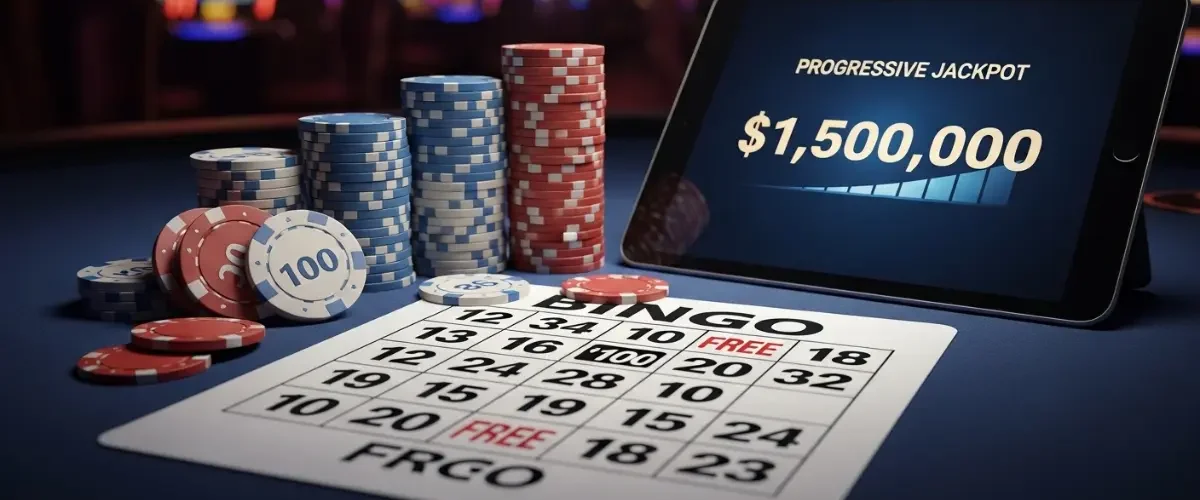
Most players sit down, buy their cards, and hope for the best. That’s not a strategy. That’s a lottery ticket mentality dressed up in bingo clothes. Progressive jackpots work differently. They grow. They compound. They wait. And most players don’t even understand the mechanics behind them. We’re going to fix that right now.
How the Jackpot Machine Actually Works
This isn’t magic. It’s math. Every ticket sold, every game played, every card purchased feeds the pool. A licensed platform, such as LuckyStart Casino, operates as a high-performance financial engine, and progressive bingo rooms are one of the cleanest instruments for stacking real, trackable prize money over time. The numbers don’t lie. The system is designed to grow.
Here’s the core mechanic. A small percentage of every wager goes into a central pot. That pot doesn’t reset to zero after a standard win. It carries forward. Game after game. Room after room. Sometimes across entire networks of platforms. The result is a prize pool that can balloon from a few hundred dollars into figures that change lives. That’s not hype. That’s arithmetic.
The community model is the engine. More players means more contributions. More contributions means faster growth. The jackpot becomes a shared creation, built by every participant whether they win or not. It’s a collective financial structure. Cold, efficient, and genuinely powerful.
The Anatomy of a Progressive Prize Pool
Not all progressive jackpots are built the same. There are different structures, different trigger conditions, and different growth rates. Understanding the difference isn’t optional. It’s the baseline for any serious player.
Standalone vs. Network Progressives
Two models dominate the space. They behave very differently, and confusing them costs money.
Here’s a quick breakdown before you pick your table:
| Feature | Standalone Progressive | Network Progressive |
| Prize Pool Source | Single room or platform | Multiple platforms combined |
| Growth Speed | Slower, steadier | Faster, sometimes explosive |
| Win Frequency | Higher | Lower |
| Prize Ceiling | Moderate | Potentially massive |
| Competition Level | Lower player volume | High player volume |
| Best For | Consistent, lower-risk play | Chasing life-changing payouts |
Know which one you’re sitting in. The platform will tell you if you read the room details. Most players don’t read. Don’t be most players.
Trigger Conditions: What Actually Releases the Jackpot
Winning the standard game doesn’t always win the progressive. Triggers vary. Some require a full house within a set number of calls. Others require specific patterns. A few are randomized overlays. Read the rules before you buy cards. This is non-negotiable.
Playing With a Progressive Strategy in Mind
Random card selection and crossed fingers don’t cut it at this level. There’s a process. Follow it or don’t. But don’t complain about the results if you skip steps.
Work through this sequence every session before you spend a single dollar:
- Check the current jackpot value. Know what you’re playing for. A small pool may not justify aggressive card buying.
- Read the trigger rules completely. Full house in 48 calls? Pattern specific? Know before you commit.
- Assess the player count. More players means tougher competition but faster pool growth. Factor both.
- Set a session bankroll limit. Decide before you enter. Not after you’ve lost half of it.
- Select cards with maximum number spread. Avoid cards that duplicate numbers heavily. Diversity improves coverage.
- Track the jackpot growth rate across sessions. A pool growing fast is close to critical mass. Timing matters.
- Exit if the pool resets and conditions change. Discipline over emotion. Always.
Bankroll Management Is Not Optional
Progressive jackpots are long-game structures. You will not win every session. You were never supposed to. The model rewards patience and consistent, disciplined participation. Blow your bankroll chasing one session and you’re out of the game permanently. That’s the worst possible outcome. Stay funded. Stay in play.
PRO TIP: Target progressive bingo rooms where the jackpot hasn’t been claimed for several cycles. Older, untriggered pools carry compounded contributions from multiple game rounds. The prize density is higher, the psychological pressure on the pool is greater, and statistically, a trigger event is overdue. Watch the history logs on the platform. They’re usually visible. Use them.
The Psychology Behind the Pool
Progressive jackpots are not just financial instruments. They’re behavioral engines. The rising number creates urgency. It creates community tension. Players talk about it. They return for it. The accumulating prize pulls participation upward, which in turn grows the prize further. It’s a self-reinforcing loop. Platforms know this. You should too.
That shared anticipation has real value. It changes the texture of a game session. Players who understand the mechanics feel the excitement differently. They’re not just hoping. They’re calculating. There’s a genuine difference between those two states. One makes money. The other just spends it.
Why Life-Changing Figures Are Actually Achievable
People dismiss big jackpot claims. We get it. Skepticism is healthy. But the numbers in networked progressive bingo pools are documented. They are public. They have paid out six-figure sums to real accounts. The mechanism is transparent. Contributions stack. The trigger is hard. But someone always hits it eventually. The question is whether you’re positioned to be that person when it happens.
You don’t need to be a professional gambler. You need to be a disciplined one. Those are very different things. Professionals are full-time. Disciplined players just follow a process. The process is learnable. You’re reading the foundation of it right now.