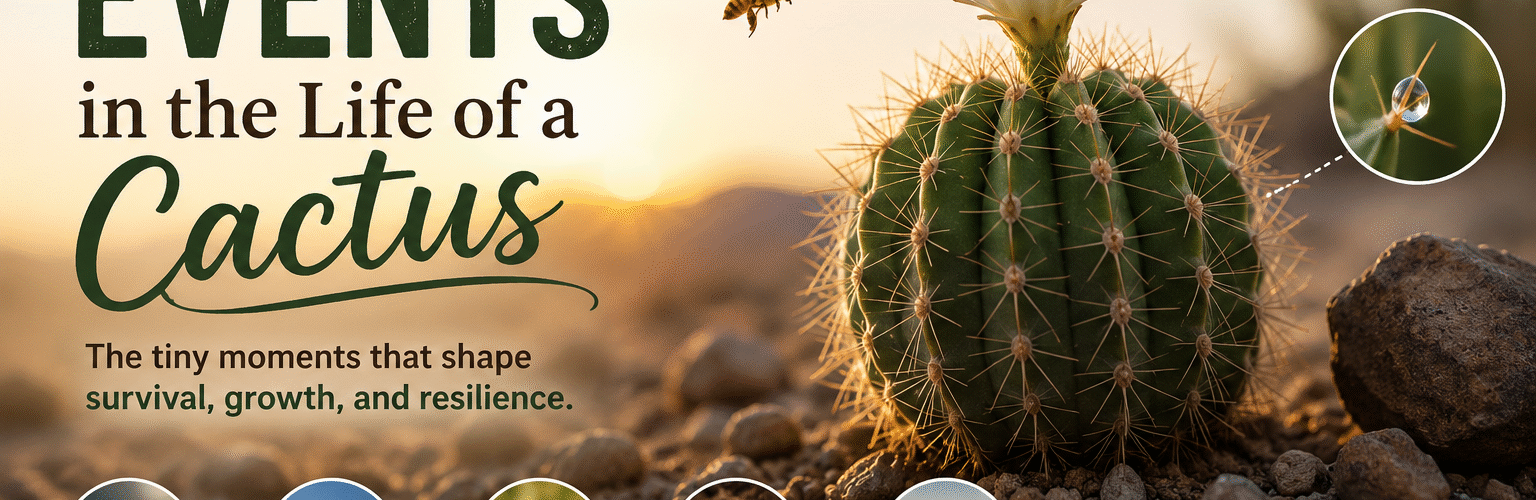
When people think about a cactus, they usually imagine a tough desert plant standing still under the blazing sun. It may seem as though nothing much happens in its life besides growing slowly and storing water. However, the truth is quite different. Many insignificant events in the life of a cactus quietly influence its health, growth, and ability to survive. These tiny moments often go unnoticed, yet they play an important role in the plant’s journey.
From a single drop of rain to the passing shadow of a bird, small daily changes affect a cactus more than most people realize. Understanding these subtle events offers a fresh appreciation for one of nature’s most resilient plants.
Why Small Events Matter More Than They Appear
Life in dry environments is unpredictable. Rainfall is rare, temperatures swing dramatically between day and night, and nutrients are limited. Because of these conditions, even the smallest environmental change can make a meaningful difference.
A cactus has evolved to respond efficiently to tiny opportunities. It conserves energy, stores water, and adapts its growth according to its surroundings. While these responses may appear insignificant individually, together they determine whether the plant thrives for decades or struggles to survive.
Everyday Moments That Shape a Cactus’s Life
A Few Minutes of Morning Dew
Although deserts receive little rainfall, morning dew sometimes forms on the surface of rocks and plants. Certain cactus species can benefit from this tiny amount of moisture. While it is far from enough to replace rainfall, every bit of water contributes to the plant’s overall hydration.
A Passing Cloud
Shade lasting only a few minutes may reduce heat stress during the hottest part of the day. Lower surface temperatures help minimize water loss through the plant’s outer tissue, allowing it to preserve valuable moisture.
Gentle Air Movement
Light wind may seem unimportant, but it helps regulate temperature around the plant. It can also carry pollen between flowers or spread seeds to new locations after fruits mature.
Tiny Insects Visiting Flowers
Many insects are attracted to cactus blooms. Bees, beetles, butterflies, and even moths may visit for nectar. Some insects become accidental pollinators, allowing future generations of cactus plants to develop.
Without these brief encounters, successful reproduction would become much less common.
Small Changes Below the Surface
Much of a cactus’s activity happens underground, where it remains invisible.
Its shallow root system spreads widely rather than deeply. This design allows the plant to absorb water quickly after even a light rainfall. As the soil dries, root activity slows to conserve energy until moisture returns.
Small soil events include:
- Microorganisms breaking down organic matter
- Tiny shifts in soil temperature
- Brief moisture retention after rainfall
- Natural movement of minerals
These subtle processes support long-term health even though they attract little attention.
How Minor Events Add Up Over Time
One isolated event may seem meaningless. However, thousands of small events occurring throughout a cactus’s lifespan gradually create noticeable changes.
| Everyday Event | Immediate Effect | Long-Term Impact |
|---|---|---|
| Light rainfall | Quick water absorption | Better drought resistance |
| Morning sunlight | Starts photosynthesis | Steady healthy growth |
| Pollinator visit | Flower pollination | Seed production and reproduction |
| Cool nighttime temperatures | Reduced water loss | Improved energy balance |
| Fallen organic debris | Slight nutrient increase | Healthier surrounding soil |
Looking at these events together shows how a cactus survives through consistency rather than dramatic change.
Adaptation Is Built on Tiny Decisions
Unlike animals, plants cannot move when conditions become difficult. Instead, they rely on gradual adjustments.
A cactus can:
- Delay growth during drought
- Store extra water after rainfall
- Produce flowers only when conditions improve
- Redirect energy toward survival instead of rapid expansion
These biological responses happen continuously and often without visible signs.
A Real-World Example
Imagine a cactus growing beside a rocky hiking trail in Arizona. During one particularly dry season, it receives only two light rain showers over several months. Each shower lasts less than fifteen minutes. A few bees visit its flowers, and occasional morning shade from a nearby boulder slightly lowers its temperature.
None of these events would attract attention from passing hikers. Yet together, they provide enough support for the cactus to survive until the next rainy season arrives.
This illustrates how seemingly unimportant moments become essential pieces of a much larger survival strategy.
Lessons Nature Teaches Through a Cactus
There is something surprisingly inspiring about observing a cactus closely. It reminds us that success rarely comes from one dramatic breakthrough. Instead, steady progress often results from countless small improvements accumulated over time.
I remember growing a small cactus on my windowsill, and watching its slow but steady growth taught me that patience often reveals changes we initially overlook.
That simple observation mirrors how these plants thrive in some of Earth’s harshest environments.
Common Misconceptions About Cactus Growth
Many people assume cacti simply exist without changing much. In reality, they remain highly responsive to their surroundings.
Some common myths include:
Myth: Cacti hardly need water.
Reality: They need far less water than many plants, but regular hydration at appropriate intervals remains essential for healthy growth.
Myth: They never change.
Reality: Growth may be slow, but cacti constantly adjust their internal processes based on light, moisture, and temperature.
Myth: Desert plants live in lifeless environments.
Reality: Deserts support complex ecosystems filled with insects, birds, reptiles, mammals, fungi, and microorganisms that interact with cactus species every day.
Why These Small Events Matter to Gardeners
People growing cacti indoors or outdoors often focus only on watering schedules. However, several overlooked factors contribute just as much to healthy plants.
Paying attention to light exposure, airflow, soil drainage, seasonal temperature changes, and proper containers often produces better results than increasing watering frequency.
Healthy cactus care is usually about making many small decisions correctly instead of relying on one major solution.
Read Also: How to Be Better at Interior Design Mintpaldecor
The Bigger Picture
Nature rarely depends on dramatic moments alone. Every living organism is shaped by countless tiny interactions that accumulate over time.
For cacti, these seemingly insignificant events include droplets of water, pollinating insects, slight temperature shifts, changing sunlight, and underground biological activity. Individually they appear unimportant. Together they create one of the world’s most successful survival stories.
Understanding these hidden details helps us appreciate not only cactus plants but also the remarkable balance found throughout natural ecosystems.
Conclusion
The phrase insignificant events in the life of a cactus may suggest moments that do not matter, but the opposite is true. Small environmental changes, brief encounters with pollinators, tiny amounts of moisture, and subtle shifts in temperature quietly influence every stage of a cactus’s life.
By recognizing these overlooked events, we gain a deeper understanding of how resilience is built. Just as a cactus survives through countless small advantages rather than dramatic transformations, nature often demonstrates that lasting success comes from consistent, almost invisible progress.
Frequently Asked Questions
What are insignificant events in the life of a cactus?
These are small everyday occurrences such as brief rainfall, morning dew, insect visits, changing temperatures, or slight shifts in sunlight that seem minor but contribute to a cactus’s overall survival and development.
Why are small environmental changes important for cacti?
Because deserts are harsh environments, even tiny improvements in water availability, shade, or pollination can significantly affect a cactus’s health over many years.
Do cacti respond to weather changes?
Yes. Cacti continuously adjust their water storage, growth rate, and energy use according to temperature, rainfall, humidity, and sunlight.
Can a cactus survive without regular rainfall?
Many cactus species can survive long dry periods by storing water in their stems. However, occasional rainfall remains necessary for long-term health, flowering, and reproduction.
What helps a cactus thrive besides watering?
Well-draining soil, adequate sunlight, proper airflow, seasonal temperature changes, suitable containers, and avoiding overwatering all contribute to healthy cactus growth. These factors often matter just as much as the amount of water the plant receives.