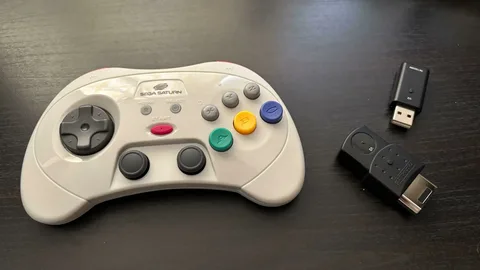
Here’s the thing about modern gaming controllers: they’re sophisticated, packed with tech, and built for versatility. But there’s a growing group of players who still swear by the feel and precision of older controllers. Not just for retro games, but for modern gameplay too. There’s something about the simplicity and responsiveness of those classic pads that still resonates with gamers today.
Let’s break down why many of us feel that way, what makes classic controllers stand out, and how you can keep that experience alive, even on new systems.
A Matter of Feel
Gaming is as much physical as it is visual. The controller isn’t just an interface; it’s a tool your hands learn over time. When you pick up a classic controller you’ve used for years, your brain already knows exactly what to expect. You don’t think about where the buttons are: your fingers just go. That muscle memory is powerful.
Compare that to a modern gamepad. Sure, it has extra triggers and rumble motors and all kinds of tech. But all those bells and whistles can sometimes blur the basic experience of button-to-action fidelity. For many players, especially in genres that depend on timing and precision like fighting games and platformers, simplicity often wins. This isn’t just nostalgia—there’s a tactile clarity that some older controllers offer that’s hard to match.
D-Pad vs. Analog: Not Just Old vs. New
This argument always comes up when comparing retro pads to modern gamepads: analog sticks versus D-pads.
Analog sticks give you freedom of movement. They’re indispensable for 3D action games and shooters. But when it comes to sharp, deliberate directional input—like what you need in classic beat ’em ups, 2D platformers, or fighting games—the humble D-pad still holds its ground.
The reason isn’t complicated. A good D-pad offers clear, unambiguous directional feedback. Your thumb can instantly jump from left to down-right without ambiguity. Analog sticks, for all their advantages, introduce a spectrum of input directions that can require a moment of adjustment. For games designed around digital directional inputs, this matters.
That’s why so many competitive players still reach for older pads when they’re mastering combos or precision platforming sequences. Controllers like the SNES pad or the original PlayStation pad weren’t perfect, but their directional pads were intuitive in ways that even modern sticks sometimes struggle to emulate.
Less Is More
Modern controllers often feel like a Swiss Army knife: they do everything, but not necessarily anything better than a dedicated tool. They come with touchpads, motion sensors, adaptive triggers, voice controls, and vibration motors that simulate surface texture or strain.
None of this is inherently bad. But all those features can shift focus away from the core job of a controller: precise input.
Fewer buttons, fewer layers between touch and action, and a return to straightforward physicality can reduce cognitive load and let you play without thinking about the controller. That’s one reason retro controllers still feel great for games built around simple, tight mechanics.
The Problem: Compatibility
Okay, so older controllers feel great. But the reality is that most modern consoles and PCs don’t natively support them. You can’t just plug an NES pad into a PlayStation 5 or a Switch and expect it to work. That’s where gaming adapters come in.
Plugging original controllers into modern gear used to be clunky, unreliable, or downright impossible. The market had some half-baked solutions, but many of them introduced lag, required drivers, or only supported a small subset of controllers.
That’s changed in the past few years thanks to universal adapters designed specifically for this challenge.
Keeping the Classics Alive
One promising option for bridging generations of controllers and systems is Bliss-Box. It’s a project and product line built by gamers who grew up with the hardware they now want to keep using. The concept is simple: take original controllers from consoles like NES, SNES, N64, PlayStation, Sega Genesis, and more, and make them usable on modern platforms with plug-and-play ease.
What makes this approach valuable for a blog like this is that it preserves the authentic tactile experience of retro controllers while letting you play across multiple devices. Instead of settling for a modern gamepad that “sort of feels like” what you want, you can use the real original thing with your setup.
The adapters handle all of the technical translation—no drivers, no complex configuration. You just connect your controller through the adapter, and it works on PC, consoles, emulators, or even emulation front-ends on Raspberry Pi.
Adapters like this aren’t just nostalgia tools. They’re ways to keep the unique design and feel of classic controllers alive, even as gaming hardware marches forward. For players who care about precision, character, and that unmistakable click of an old D-pad, it’s a real answer to a long-standing problem.
Why It Still Matters Today
You might be wondering: are retro controllers really better, or is this all rose-tinted memory talking? Here’s the thing: for certain types of games, many players still prefer older designs. Competitive players in fighters, platformers, rhythm games, and emulation scenes often choose classic hardware because it delivers predictability and timing that feels more direct than some modern pads.
In a big open-world RPG, analog sticks shine. But when you need exact directional input or consistent button presses for pixel-perfect jumps, retro pads often have the edge.
Modern controllers have their place. They excel in complexity, comfort for long sessions, and features that support immersive, three-dimensional games. But that doesn’t negate the value of simplicity—especially when you’re playing the classics or games built with older input styles in mind.
The Bridge Between Then and Now
Here’s what this really means for gamers: you don’t have to choose between nostalgia and functionality. With tools like universal adapters, you can keep the feel you love while using hardware that’s current and flexible. You get the best of both worlds: the tactile clarity of the past and the convenience of today’s platforms.
If you’ve ever looked at your stack of classic consoles and thought some of those controllers deserved a second life on modern hardware, you’re not alone. The community around preserving gaming experiences isn’t just about collector culture. It’s about preserving the way games were meant to feel.
Retro controllers beat modern gamepads in specific ways because they were designed with constraints—and clarity—in mind. Modern controller tech is impressive, but it excels in breadth, not always in precision.
With the right adapters and a willingness to mix old and new, you can start seeing your controller collection not as museum pieces but as tools that still have purpose in today’s gaming world.