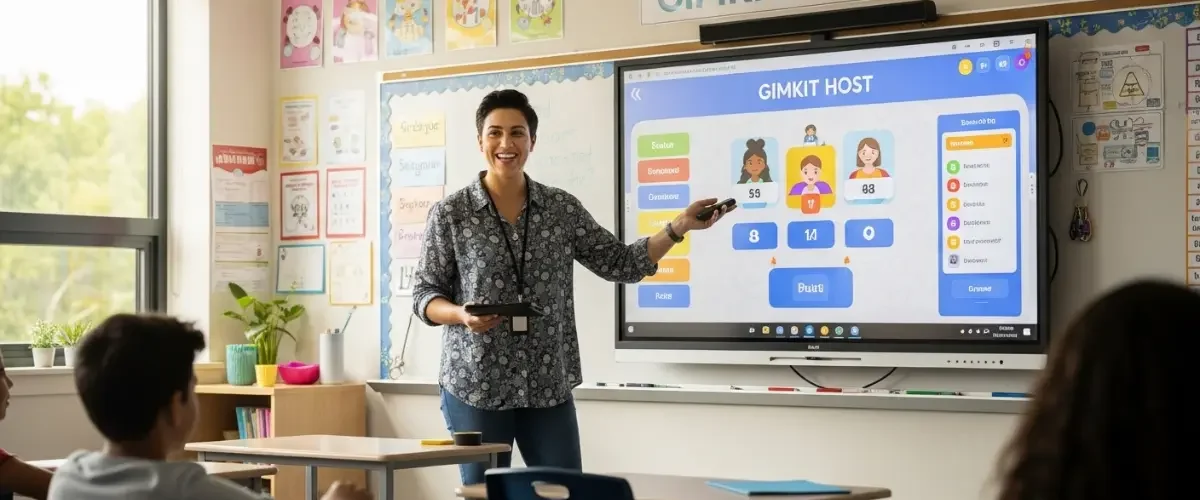
Being a Gimkit Host is an exciting way to make learning fun for students. As a host, you get to manage the game, create questions, and watch players compete in real time. Hosting helps teachers engage students and make lessons more interactive, while students enjoy learning in a playful environment.
Understanding the Role of a Gimkit Host
Understanding the role of a Gimkit Host is very important for running a smooth game. A host is different from a player because they manage the game, set the rules, and guide everyone during play.
The host makes sure that all players can join, answer questions correctly, and have fun while learning. Being a good host also means keeping the game fair, encouraging students, and solving small problems if they happen.
Setting Up Your First Gimkit Game
Learn how to start your very first Gimkit game easily as a host.
- Open Gimkit and log in to your account.
- Click on “Create New Game” to start setting up.
- Choose a game mode that fits your lesson plan.
- Set the game rules, like time limits and points per question.
- Add questions or import them from a library.
- Customize the game with images, hints, or power ups.
- Share the game code with your students so they can join.
- Check all settings one more time before starting.
- Start the game and monitor player activity in real-time.
- Make adjustments during the game if needed for smooth play.
Following these steps helps you run your first Gimkit game easily and successfully.
Exploring Different Game Modes
Gimkit offers different game modes to make learning fun and interactive for everyone.
- Classic Mode: Players answer questions to earn money and compete for the highest score.
- Team Mode: Students can work together in groups to answer questions and share points.
- Timed Mode: Each question has a time limit, making the game fast and exciting.
- Live Mode: The host can control the pace, showing questions one by one to all players.
- Review Mode: Players can go over previous questions to learn from mistakes.
- Power Up Mode: Includes special boosts that players can use to get advantages during the game.
- Custom Mode: Hosts can mix different modes and rules for a unique experience.
- Practice Mode: Lets students play without competition to improve skills.
- Challenge Mode: Players compete to complete challenges within the game for extra points.
- Fun Mode: Designed to make learning playful and relaxed, great for beginners.
Exploring these game modes helps hosts choose the best style for their students and makes learning more engaging.
Managing Players as a Host
As a Gimkit Host, managing players is an important task to keep the game running smoothly. The host can add or remove players, organize them into teams, and make sure everyone joins on time.
It is also the host is job to keep players engaged, encourage participation, and help those who face problems like disconnections. A good host watches the game closely, ensures fair play, and motivates students to do their best while having fun.
Customizing Game Content
As a Gimkit Host, you can make your game more interesting by customizing the content. Hosts can create their own questions or use ready-made ones from the library. You can add images, hints, and even power ups to make the game more fun and engaging.
Customizing questions helps students learn better because they match the lesson topic. A host can also adjust difficulty levels so that everyone can participate and enjoy the game.
Using Gimkit Power Ups and Rewards
Power ups and rewards make Gimkit games more exciting and motivate students to participate.
- Power Ups Overview: Power-ups are special tools that help players earn extra points or advantages.
- Types of Power-Ups: Some common power-ups include doubling points, skipping questions, or stealing points from others.
- Reward System: Hosts can give rewards to students for completing tasks or answering questions correctly.
- Encouraging Competition: Using rewards and power-ups creates healthy competition among players.
- Motivating Students: Rewards make students more interested in learning while playing the game.
- Strategic Use: Hosts can plan when and how to use power-ups for maximum engagement.
- Custom Rewards: Hosts can create their own rewards based on classroom goals or challenges.
- Monitoring Effects: Watch how power-ups and rewards influence gameplay and adjust for better results.
- Fun Learning: Combining power-ups and rewards makes learning playful and interactive.
- Balancing Game: Use power-ups carefully so the game stays fair and enjoyable for everyone.
Proper use of power-ups and rewards keeps students engaged and makes Gimkit games more fun and effective.
Monitoring Progress and Scores
Tracking progress and scores helps hosts see how students are performing and learning during the game.
- Real Time Tracking: Hosts can watch students’ answers and points as they play.
- Scoreboard Overview: The scoreboard shows top players and helps create friendly competition.
- Analyzing Results: Hosts can check which questions were easy or difficult for students.
- Identifying Strengths: Monitoring helps see which topics students understand well.
- Spotting Weak Areas: Hosts can find areas where students need more practice.
- Encouraging Participation: Showing progress motivates students to answer more questions.
- Adjusting Difficulty: Hosts can change question difficulty based on student performance.
- Sharing Feedback: Hosts can give feedback to help students improve.
- Tracking Team Performance: In team games, hosts can see which team is performing best.
- Celebrating Achievements: Recognize top performers to encourage learning and fun.
Monitoring progress and scores helps hosts guide students better and make learning more effective and enjoyable.
Troubleshooting Common Hosting Problems
Hosting a Gimkit game can sometimes have small problems, but knowing solutions helps the game run smoothly.
- Player Disconnections: Check internet connection and ask disconnected players to rejoin.
- Late Joiners: Allow late students to join using the game code without disturbing others.
- Game Freezing: Refresh the game or restart if the platform slows down.
- Incorrect Scores: Verify answers and recalculate points if needed.
- Technical Glitches: Keep browser and app updated to prevent bugs.
- Audio/Video Issues: Make sure device settings are correct for any media in the game.
- Cheating Prevention: Monitor players and explain fair play rules before starting.
- Question Errors: Double-check question content and answers before the game starts.
- Power-Up Problems: Ensure power-ups work as intended and adjust if needed.
- Communication Issues: Keep clear instructions and help students if they are confused.
Knowing how to solve common problems helps hosts keep the game fun, fair, and uninterrupted.
Pros and Cons About Gimkit Host
Some Pros and Cons of Gimkit Host:
| Pros | Cons |
| Makes learning fun and interactive for students | Hosts need stable internet for smooth gameplay |
| Helps teachers manage and track student progress | Can be challenging for beginners to set up |
| Encourages healthy competition among students | Technical glitches can interrupt the game |
| Customizable questions and content for lessons | Requires attention to manage players and rules |
| Engages students with power-ups and rewards | Some students may need extra help to join |
| Can improve teamwork in group games | May take extra time to prepare content |
| Provides instant feedback to students | Too many power-ups can make the game confusing |
| Supports multiple game modes for variety | Hosts must monitor scores and fairness |
| Motivates students to participate actively | Late joiners or disconnected players can be tricky |
| Easy to review results and identify weak areas | Needs careful planning for effective learning |
Common FAQs About Gimkit Host
Some Faqs of Gimkit Host:
Can a host change the game rules after starting the game?
Yes, hosts can adjust some settings during the game, like time per question or enabling/disabling power-ups, to make the game smoother.
How many players can join a Gimkit game at once?
Depending on the plan, a host can have dozens or even hundreds of players join at the same time. Free accounts have smaller limits.
Can hosts track individual player progress over multiple games?
Yes, Gimkit saves player scores and progress, so hosts can monitor learning trends across several sessions.
Are there shortcuts to quickly add questions to a game?
Yes, hosts can import questions from spreadsheets or libraries instead of typing them manually, saving time.
Can hosts mute or control disruptive players?
Yes, hosts have options to manage players who cause interruptions or break game rules.
Do hosts get any analytics after the game ends?
Yes, detailed analytics show which questions were hardest, who performed best, and overall class progress.
Can multiple hosts run the same game together?
Yes, co-hosting is possible in some plans, allowing multiple teachers to manage the game simultaneously.
Is it possible to replay a previous game as a host?
Yes, hosts can duplicate past games, adjust content, and run them again for practice or review sessions.
Conclusion
Being a Gimkit Host is a fun and rewarding way to make learning exciting for students. Hosts can manage games, track progress, use power-ups, and create custom content to keep everyone engaged.
By understanding their role and using tips wisely, hosts can make every game fair, interactive, and enjoyable. Hosting with Gimkit not only helps students learn better but also makes teaching more fun and effective.